
Print


25 01 2026 12:56
News Code : 187979011
View Count : 1165
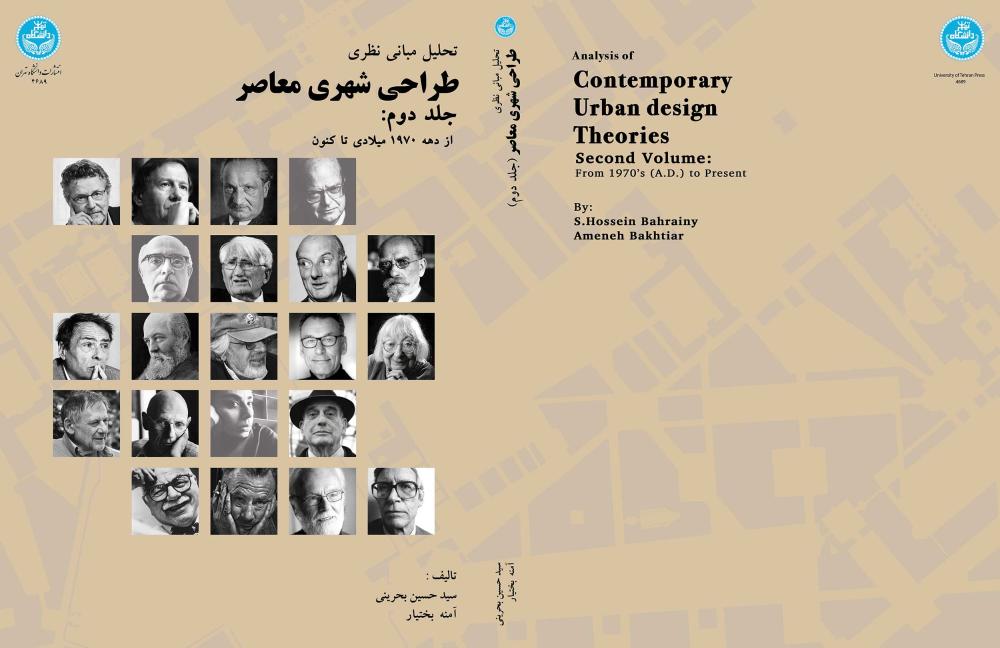
Following the publication of the first volume of the book "Analysis of the Theoretical Foundations of Contemporary Urban Design, from the Late Nineteenth Century to the Seventies", urban design has been widely considered in many countries of the world with diverse backgrounds and experiences, which has added to its previous complexity and ambiguity over the years. If urban design has grown in line with the astronomical growth of information in other fields, then we will be faced with a huge amount of information in this field. One of the effects and consequences of this change is that although urban design is still based on the theories of its founders, namely Jane Jacobs, Kevin Lynch, Gordon Cullen, Donald Appleyard and Christopher Alexander, at the same time, the importance of their theories has been somewhat reduced due to the more subtle and complex understandings and analyses that have been obtained around the world from a combination of theoretical explorations, empirical evidence and knowledge from professional activities. Until recently, urban design was considered as a specific emerging activity aimed at beautifying public spaces, but the situation has completely changed in the current conditions. In the preface of the book, the important and determining factors that have played an effective role in the formation of recent urban design theories are discussed as follows:
Overcoming dualities
Obscurities and limitations of urban design
The role of theory in urban design
Functional urban design
The role of globalization
The role of urban design in dealing with disasters
The role of urban design in improving environmental conditions
The role of urban design in promoting the physical and mental health of residents
The role of urban design in relation to behavioral patterns
Responsiveness to public demand
Participatory paradigm
The role of politics and power in urban design
The structure of the book, like the structure of the first volume, is presented analytically in thirteen parts and in three sections as follows:
Part I:
Theories that have been mainly used in urban design.
Part Two:
Theories that have been commonly used in urban planning and design.
Part Three:
Theories that have been used primarily in urban planning but whose potential has led urban design theorists to explore their potential application in the field and profession of urban design.
https://arch.ut.ac.ir/en/article/187979011