
Print


20 06 2026 12:10
News Code : 235754352
View Count : 323
Plants are regarded as fundamental elements in landscape architecture. Trees, shrubs, herbaceous plants, and flowers, when arranged in creative compositions within gardens and parks or alongside large structures, generate a sense of wonder and grandeur within space. Plants may be considered unparalleled masters of transformation; at every stage of their growth, they create new spatial structures. Nevertheless, it must be recognized that plants are living and dynamic elements, and their flourishing or decline depends directly on habitat conditions and soil quality. Consequently, inappropriate plant selection can produce an irregular or discordant landscape rather than an aesthetically pleasing one.
Designing with plants extends beyond the mere arrangement of colors; it requires a thorough understanding of soil conditions, climatic characteristics, plant species, and particularly their flowering periods and seasonal transformations. The objective of using plants is to create a specific atmosphere, define spatial form, shape the landscape, design garden beds, and generate distinctive visual compositions. In essence, understanding plants as both “building blocks” of landscape composition and as expressions of the “art of gardening” constitutes a fundamental key to successful design.
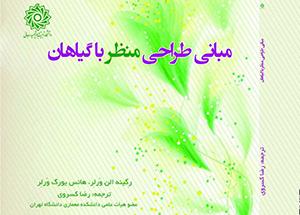
As landscape planners, we constantly engage with complex issues and are responsible for planning spaces for diverse user groups—from private gardens to residential green spaces, urban pathways, playgrounds, and grand complexes such as parks, historic sites, or pilgrimage grounds. In all of these projects, adherence to professional principles in both planning and implementation is indispensable. This book has been prepared with the aim of conveying the fundamentals of landscape architecture, presenting design approaches for a clearer understanding of space, and introducing practical implementation strategies. It is intended to be useful for a broad range of readers, including those with little or no prior experience in design.
https://arch.ut.ac.ir/en/article/235754352