
Print


13 07 2026 08:09
News Code : 239839005
View Count : 1570
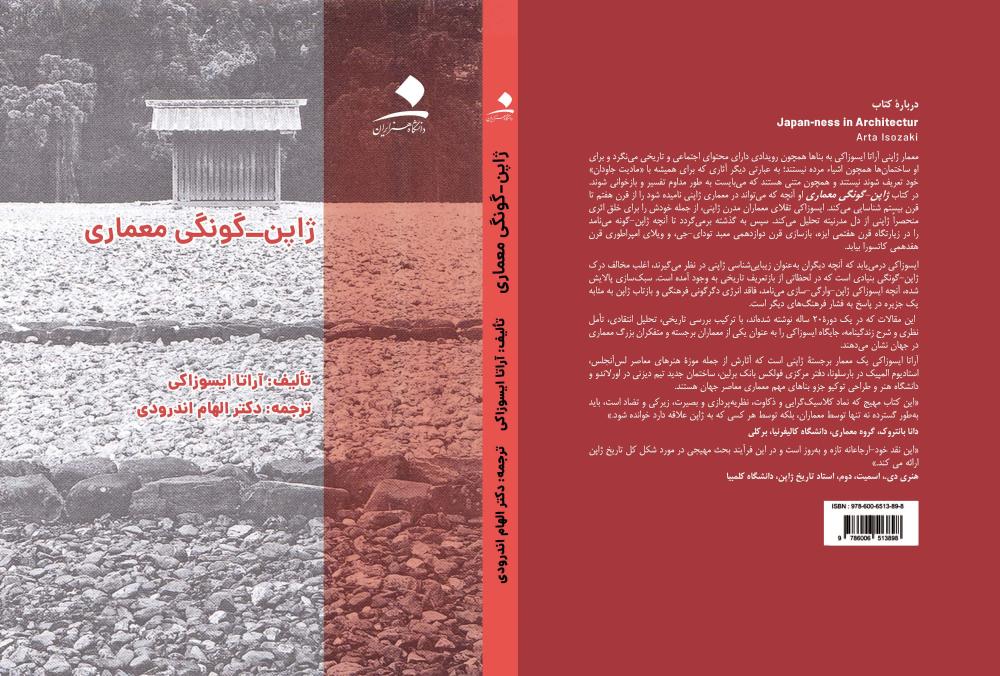
Japan-ness in Architecture written by Arata Isozaki and translated into Persian by Dr. Elham Andaroodi, presents one of the most influential theoretical works on the relationship between Japanese architectural identity, modernity, and cultural history. Rather than following a conventional chronological account of architectural history, the book critically examines the concept of "Japan-ness" and explores how it has been continuously constructed, reinterpreted, and transformed through the dynamic interaction between tradition and modern architecture.
The central argument of the book is that Japanese architecture cannot be understood through a fixed or essentialist definition of national identity. According to Isozaki, "Japan-ness" is a dynamic historical construct that has evolved through political, social, and philosophical transformations, as well as through ongoing cultural exchanges between East and West. Within this framework, architecture is understood not merely as a collection of buildings but as an intellectual and cultural discourse that continually reexamines its origins, meanings, and identity.
The volume is organized around several interconnected themes. The opening chapters explore the emergence of modern architectural thought in Japan, addressing issues such as nationalism, modernization, tradition, and globalization. Isozaki then develops comparative analyses of three of Japan's most significant architectural monuments—the Ise Grand Shrine, Tōdai-ji, and the Katsura Imperial Villa—demonstrating that these landmarks are not simply historical monuments but enduring sources of architectural thought that have inspired successive generations to reinterpret the concepts of space, ritual, structure, and cultural identity.
One of the book's defining characteristics is its interdisciplinary approach, integrating architectural history with philosophy, aesthetics, cultural studies, and comparative criticism. Through historical photographs, drawings, diagrams, and analytical illustrations, Isozaki offers new perspectives on the relationships among architecture, culture, memory, and representation.
In her introduction, the translator presents Isozaki as one of the foremost architectural theorists of contemporary Japan whose intellectual contributions extend well beyond his built works. She emphasizes that the significance of this volume lies in its ability to illuminate the mechanisms through which architectural identity is formed and continuously redefined. By making this seminal work available in Persian, the translation enriches architectural scholarship in Iran and provides students, researchers, and practitioners with access to one of the most important theoretical texts on modern Japanese architectural thought.
https://arch.ut.ac.ir/en/article/239839005